Swipe through to review the decodable texts refresher.
What Makes a Book
"Decodable"?
A Book built so students can decode almost every word using sounds they already know. No guessing required.
It's Not Random.
It's Structured.
Skills build in order, likestacking blocks. Each new bookreviews what's already taughtand adds a new piece.
Match the Book
to the Skill
A story only clicks when students already have the sounds to crack it.
Enter:
Scope & Sequence
Think of it as a treasure map. It shows which sounds come first, so every book lines up with what's already been taught.
The Cost of
Guessing
Guessing feels like reading. It isn't. Skip the decoding, and fluency stalls, making the gap harder to close.
Let Them
Do the Work
Point to the tricky sound and let students try again. Resist the urge to just hand over the word.
Pictures Are
for Checking
Let students decode the word first. The picture is there to confirm what they read, not to help them guess it.
Accuracy First,
Speed Second
Students need to read a sound or pattern correctly before they can read it quickly. That's what builds real fluency.
These principles come straight from Dr. Maria Murray', CEO and Founder of The Reading League and author of the new Read Then PeekTM decodable book set. For more in-depth guidance, read 10 Tips for Using Decodable Texts.
Common Questions About Decodable Texts
What makes a book "decodable"?
Why do decodable texts matter?
Are decodable texts the same as leveled readers?
How should teachers use pictures in decodable texts?
What's the difference between accuracy and fluency?
Should decodable texts be the only books students read?
See This Routine in Action
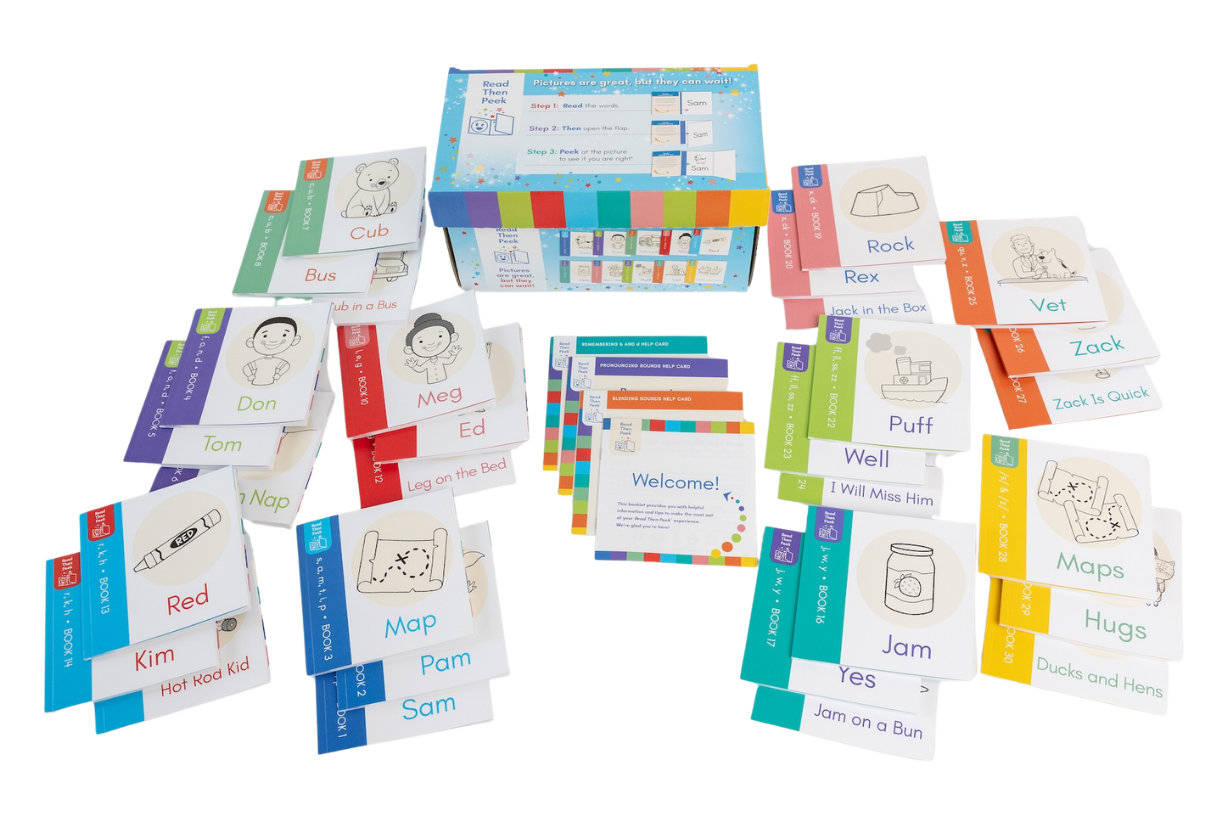
Read Then Peek™ puts these decoding fundamentals into practice. Students decode the words first with no pictures in sight, then lift the flap to confirm what they read and celebrate getting it right.